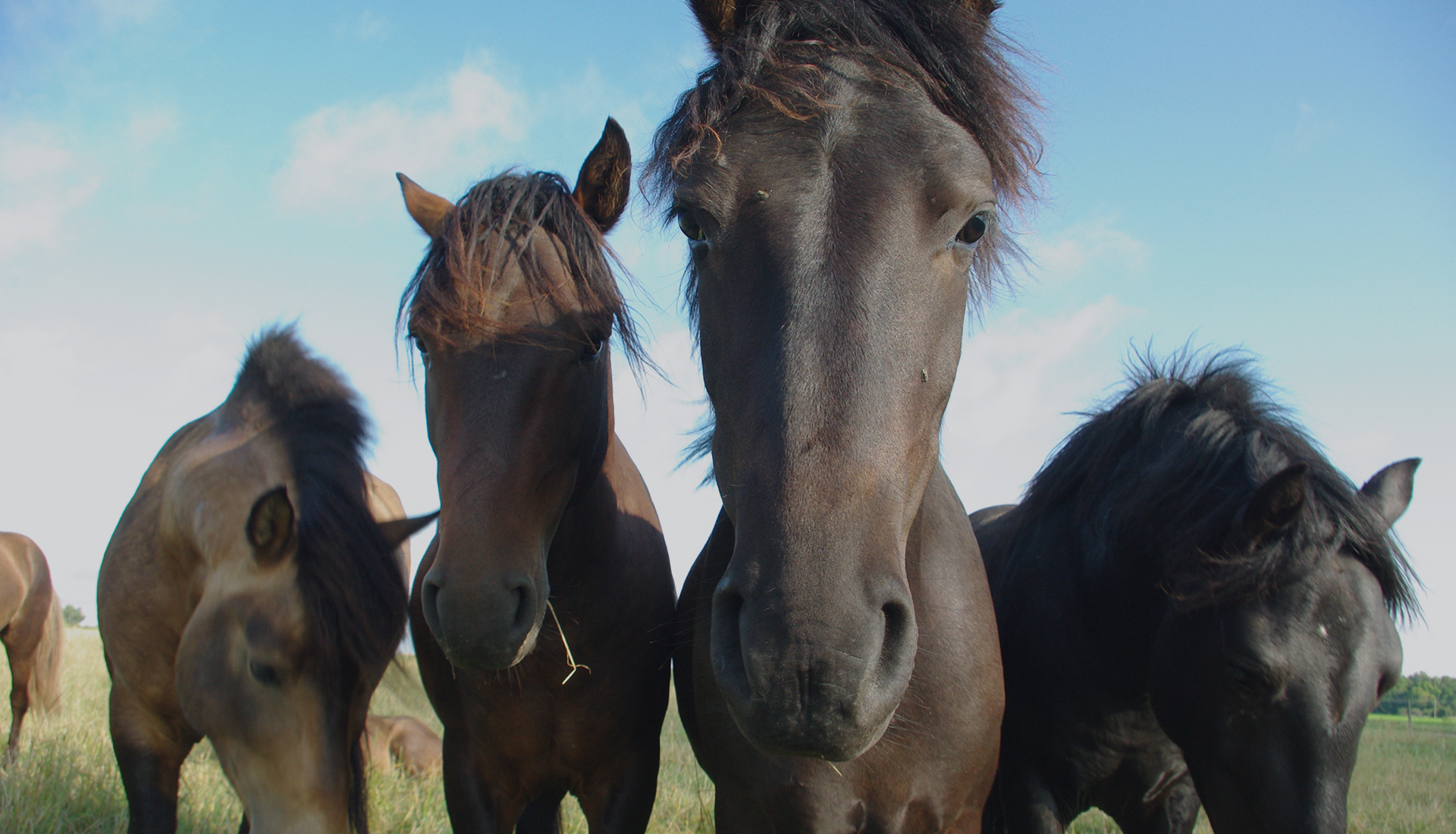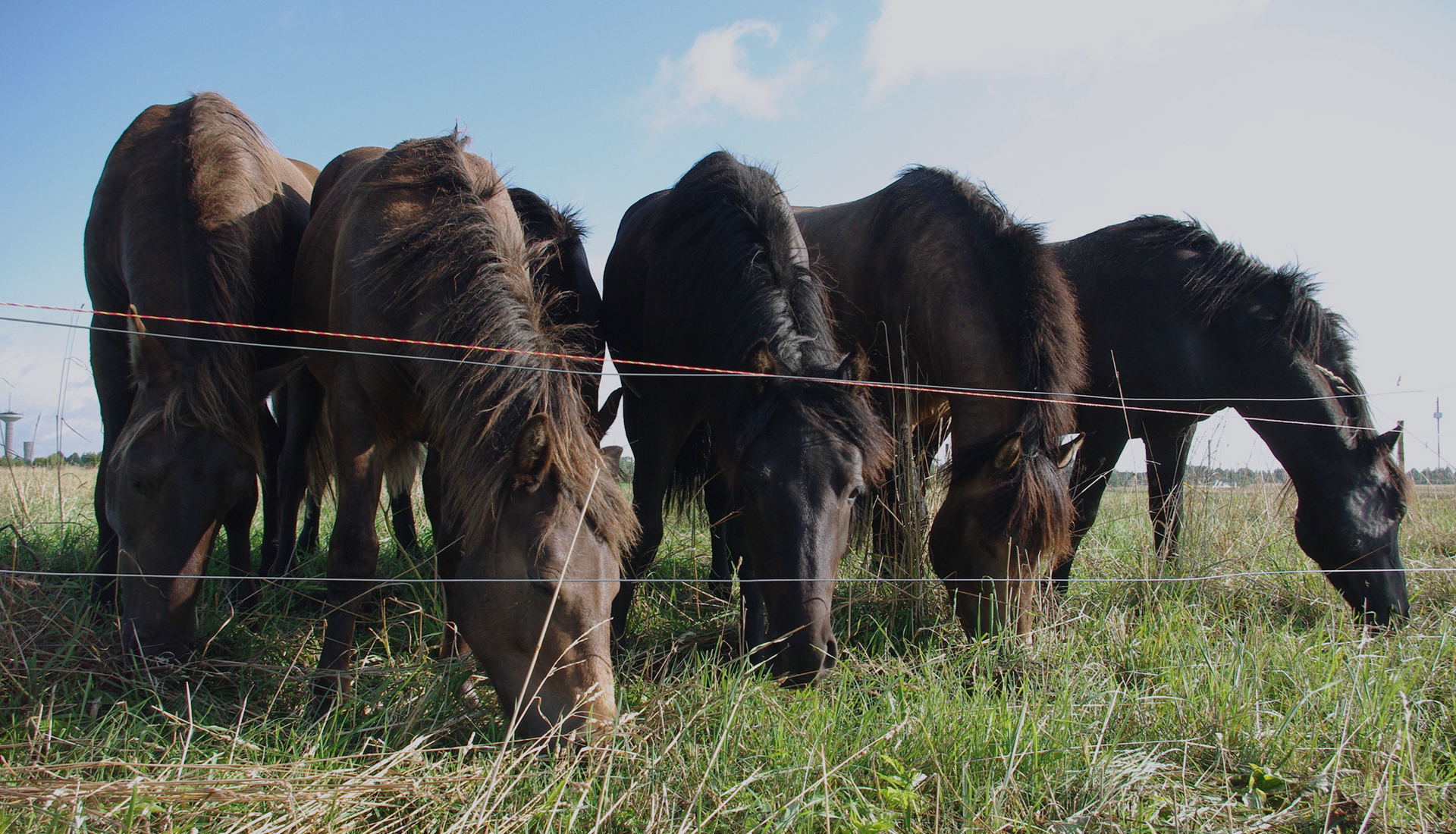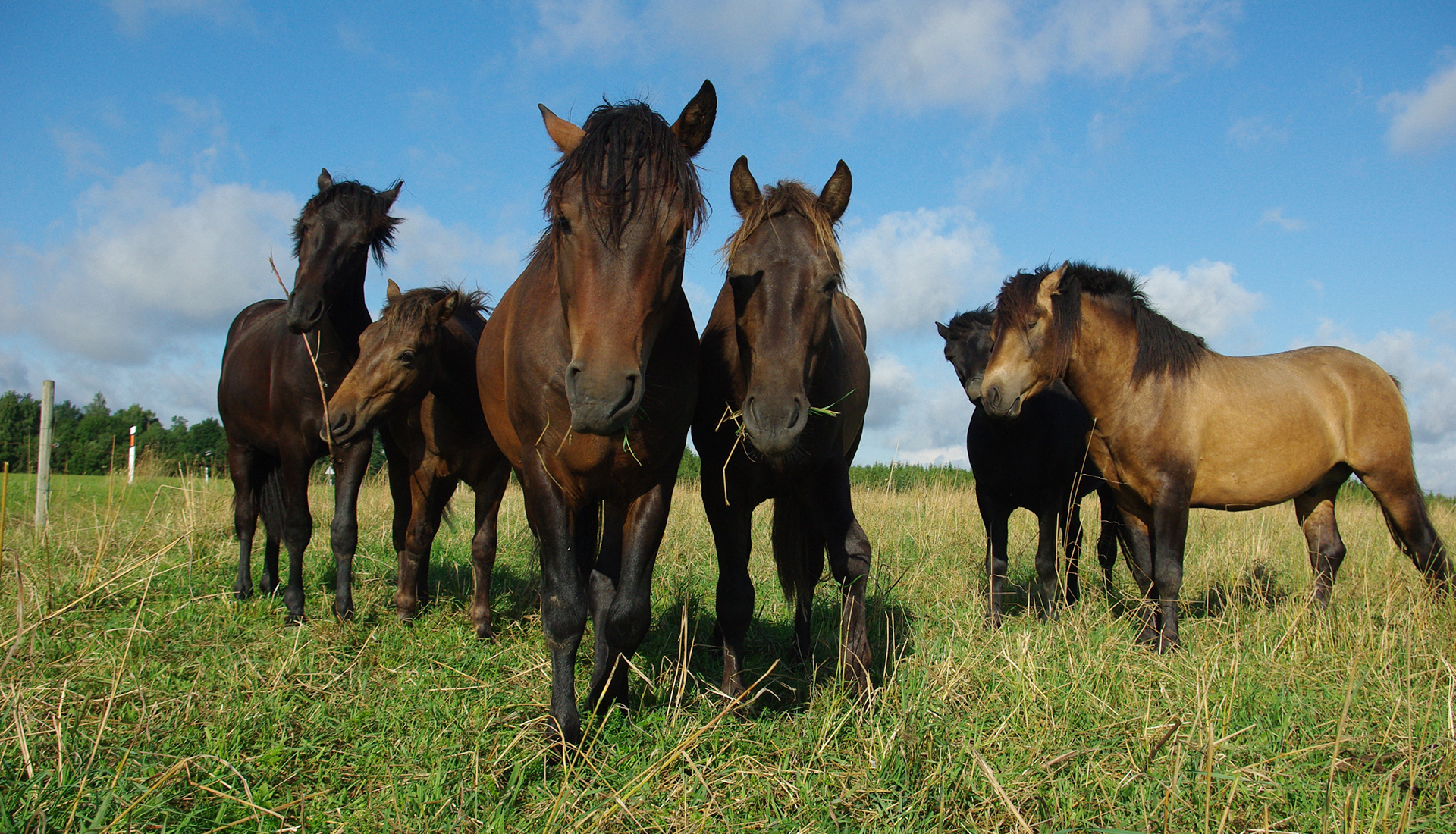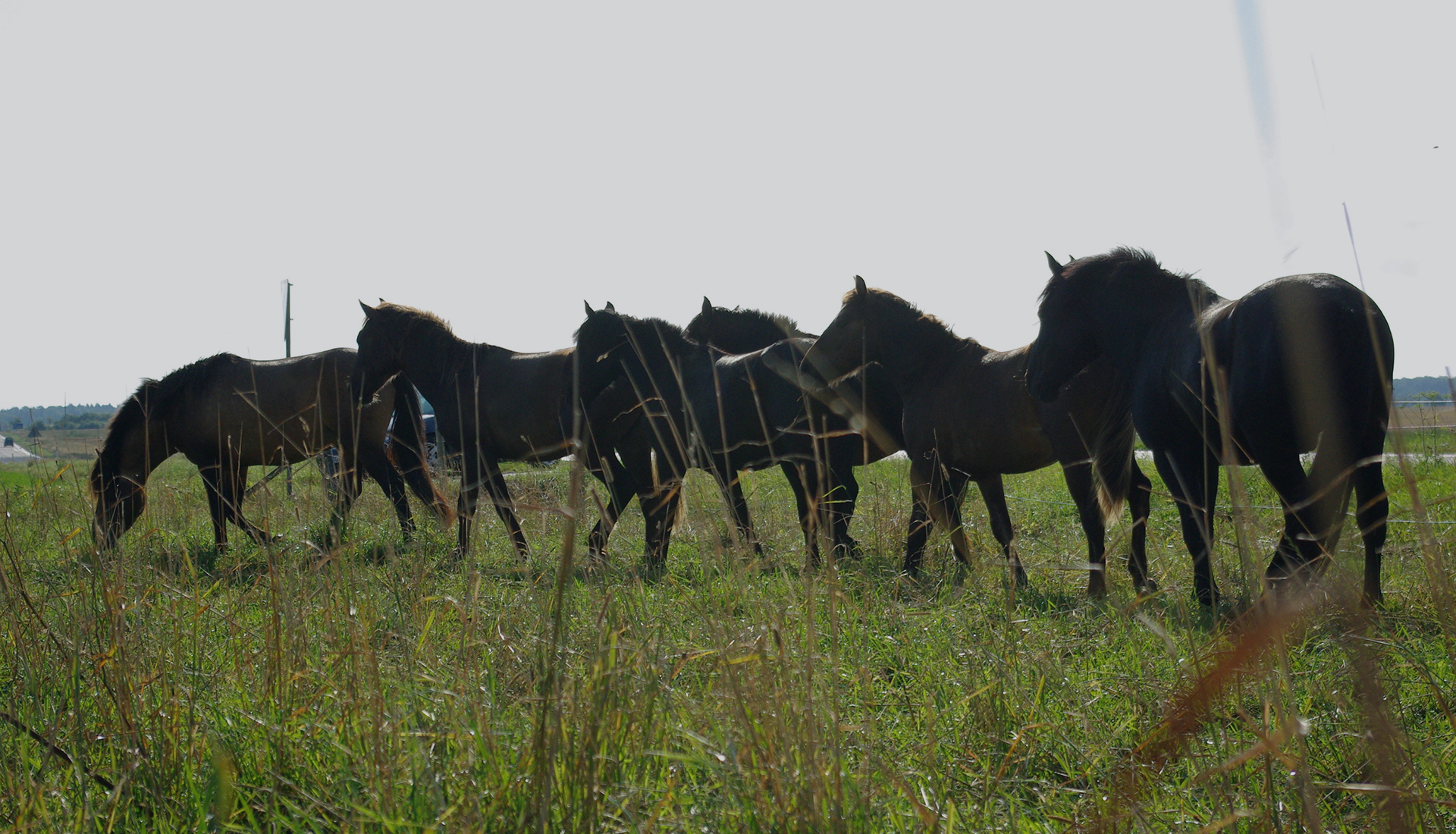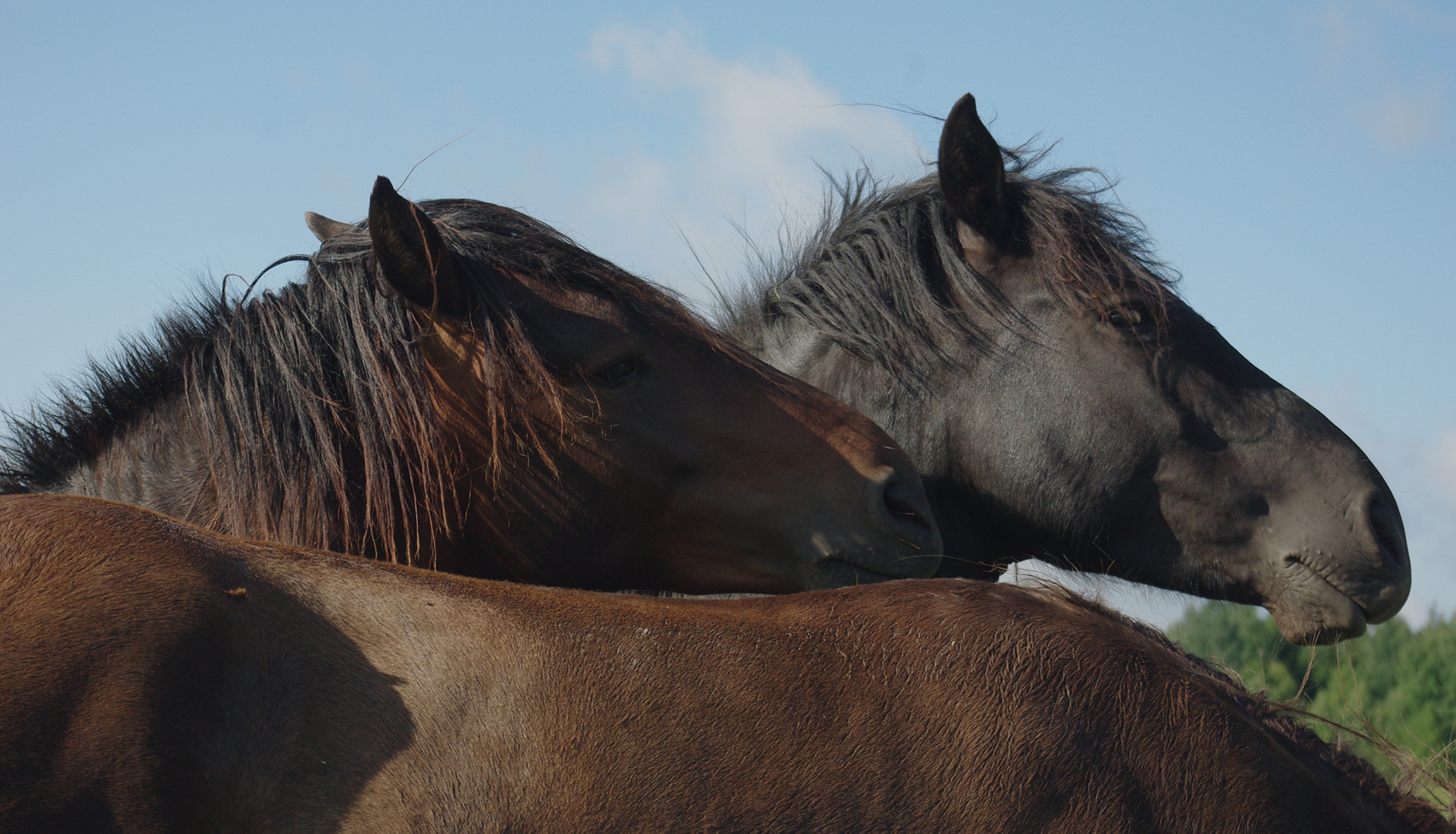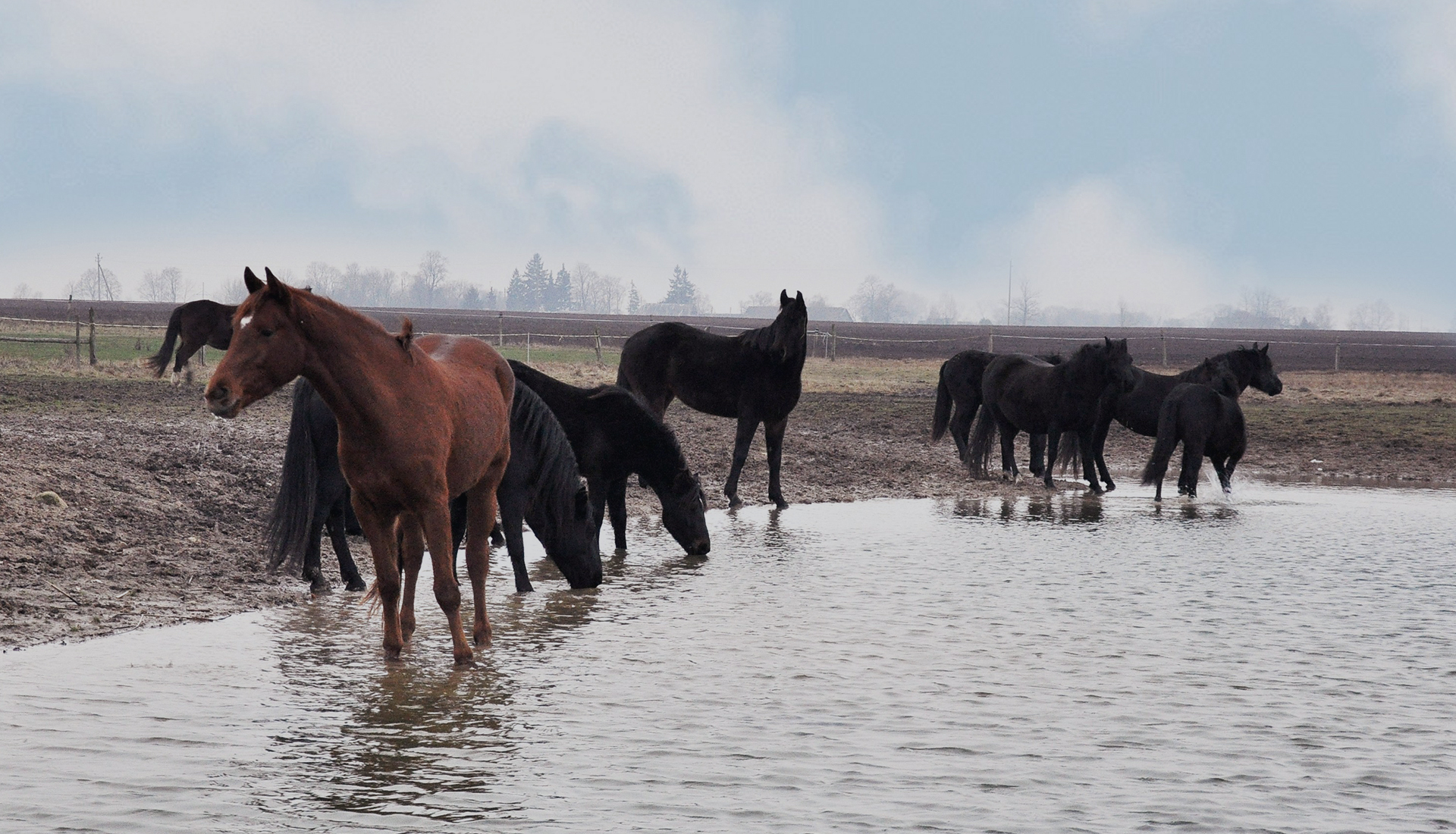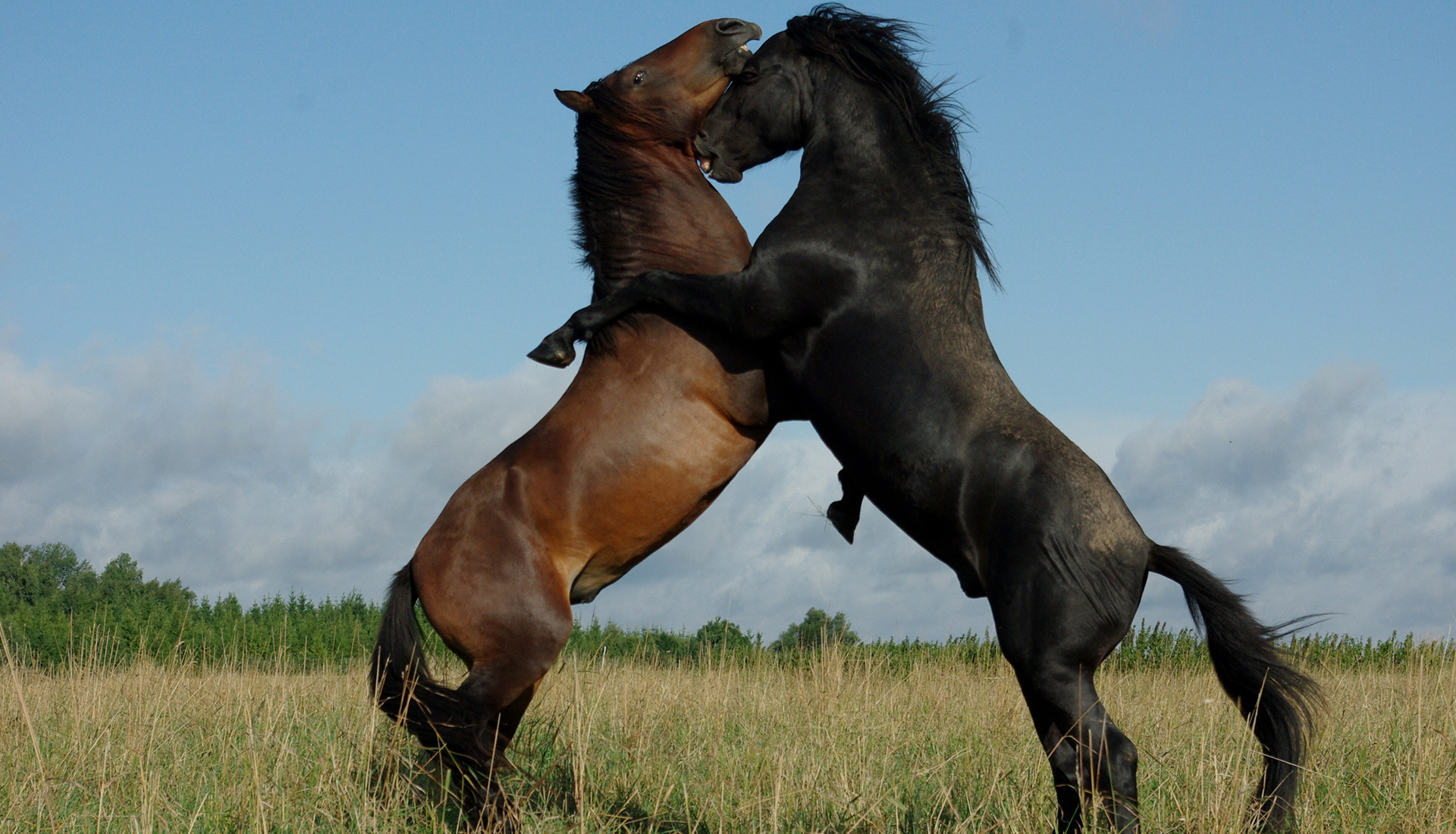
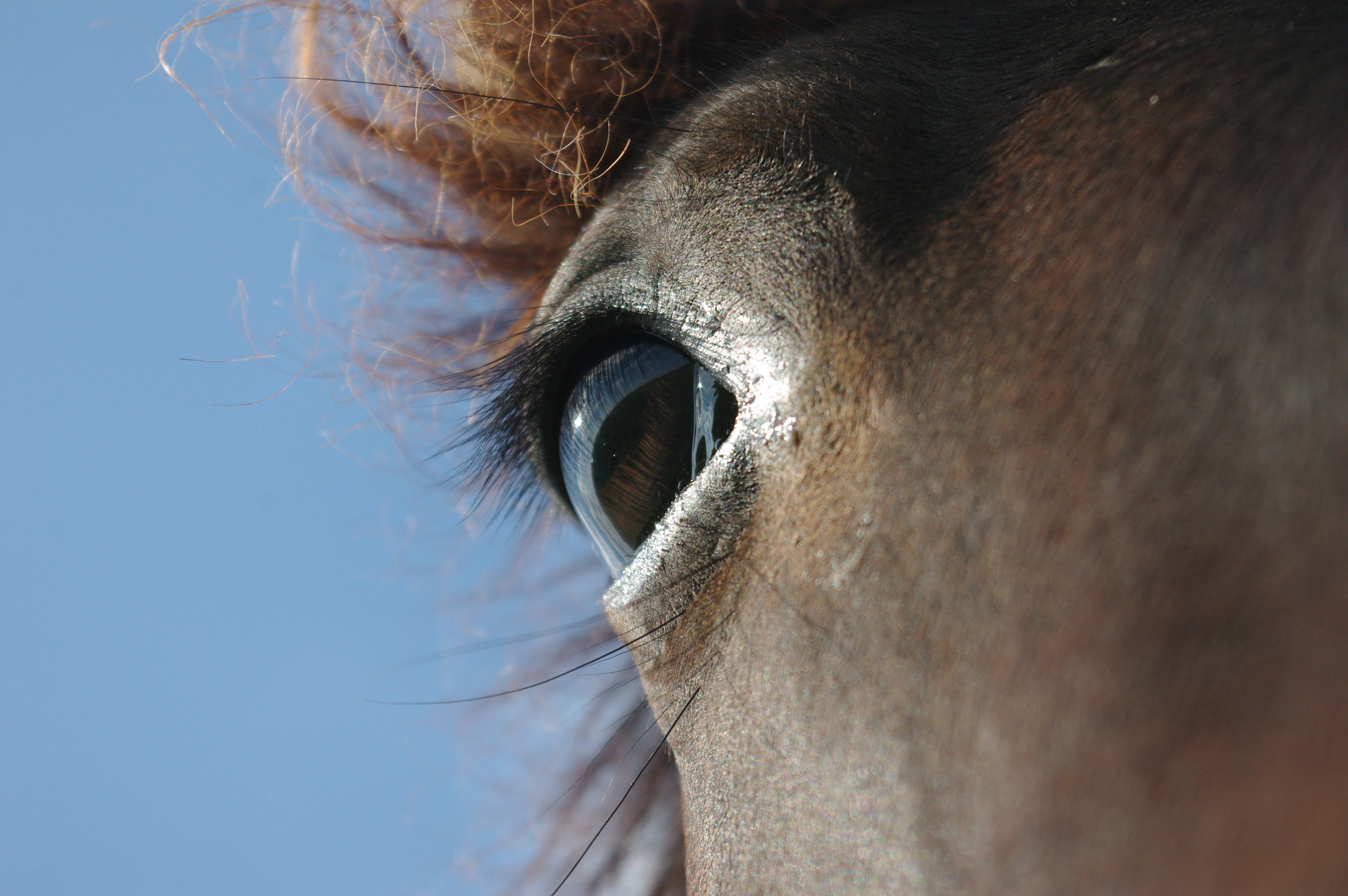
The Žemaitukai is a unique native horse breed of Lithuania, one of the oldest in Europe, known already since 6-7th centuries. A more reliable written information on the breed dates back to 13-14th centuries when the Žemaitukai won their fame as splendid war-horses in the Lithuanian-Crusader battles.
Numerous authors showed their interest in the Žemaitukai. J. Lasicky was most probably the first to mention in his book "Apie žemaičių dievus" (About the Gods of Samogitia) that in 1554 he drove to Krakow from Vilnius with a very speedy Žemaitukai horse. Later, the Žemaitukai were described by Kraczynsky (1721), I. Merder (1868), I. Oginsky (1860), M. Oginsky (1875), M. Tchapsky (1874), J. Basanavičius (1885), S. Urusov (1899-1902), J. Moraczhevsky (1912), Pravotchensky (1922), M. Kvashnin-Samarin and Z. Mockus (1927), P. Šniukšta and M. Martinavičius (1932), R. Žebenka (1934), P. Petrevičius (1939), Alminas (1939), J. Petraitis (1938-1951), K. Aleksa (1951), V. Barauskas and A. Pakštys (1986), V. Girininkienė (1989-1992) and others.
The researchers of the breed most often point out the following valuable qualities of the breed: disease resistance, remarkable endurance, undemanding as regards feeds, solid build, sufficient speed, energetic nature, high fertility, longevity, strong faultless legs, good trot and harmonious body proportions. Low stature and late maturity are indicated as negative features (S. Urusov, Z. Mockus, J. Petraitis, R. Žebenka).
Lithuanian worshipped and tended carefully the Žemaitukai for many ages. Only in the second half of 19th century, with the advance of agricultural development and higher demand for tractive force, the horses of other breeds began replacing the Žemaitukai. The number of purebred Žemaitukai decreased dramatically, and the breed was on the verge of extinction. The conservation of the breed was mostly predetermined by the efforts of the duke Irenej Oginsky and his sons Mikhal and Bogdan who founded the societies for Žemaitukai breeding in Raseiniai and, later, Rietavas.
The Žemaitukai horse had been preserved, however, the wars and reforms of 20th century had a devastating effect on the breed again. In 1918-1919, the population decreased by 60-70%. The Žemaitukai were scattered, plundered, a great number of them driven to Germany. The existence of the breed was highly threatening. In 1922, on the initiative of Žemaitukai admirers, the Ministry of Agriculture of Lithuania founded a state-owned Žemaitukai Stud in Plungė, in the former stables owned by M. Oginsky. In 1934, the Žemaitukai Stud was transferred to Gruzdžiai. However, in 1944 at the end of World War II, Germans, on their retreat, drove all the horses away and burnt down the stables. The fate of the breed could be considered as highly critical.
After the war, in 1948 on the initiative of J. Petraitis, a small herd of the remaining Žemaitukai horses collected from individual holders was established at the state-owned farm in Biržuvėnai, district of Telšiai.
Later, in 1959 the government commissioned restoration and improvement of the Žemaitukai breed for the Vilnius Stud. The small restored herd of Žemaitukai horses was increasing, the horses were distributed throughout Lithuania and sold to foreign countries.
In order to strengthen the distribution of the Žemaitukai throughout Lithuania, on the initiative of prof. Vasinauskas, prof. Šveistys and others, small herds of Žemaitukai horses were founded in the 9th decade at the experimental station in Elmininkai (Aykščiai distr.), in Terespolis (Kėdainiai distr.), Vėriškės (Radviliškis distr.) and Alanta (Molėtai distr.).
During the reforms of 1990, the herds were dramatically in decline. Various dealers have taken advantage of the situation and sold most of the best Žemaitukai to Germany and Poland, while others became the property of individual holders. Unco-ordinated breeding work has led to the situation when the number of Žemaitukai horses was reduced to only 30 in 1994. The population of this size and close inbreeding scattered in various regions of Lithuania became at high risk of disappearing. The more so as the countrymen and even agricultural specialists were often misled by the same name Žemaitukai applied to the old and heavy types of horses. Yet in fact, these horses are completely different in type, origin and range of use. The heavy-type Žemaitukai horse developed by crossbreeding at the beginning of 20th century might have veiled the disappearing of the ancient, relic and valuable breed of the old-type Žemaitukai.
However, in 1994 on the initiative of prof. J. Šveistys, o herd of Žemaitukai horses was founded at the Lithuanian Institute of Animal Science. Conservation programme and other breeding measures opened the way for preservation of Žemaitukai horses.
The Žemaitukai is not only the heritage of Lithuanian history and culture but also a valuable gene pool in world horse-breeding. The Žemaitukai were the founders of Trakehner and Lithuanian heavy-draught horse breeds and also of the heavy-type of Žemaitukai. AT the FAO conference of European countries, the Žemaitukai breed was recognized as internationally watched and included in the World Watch List for Domestic Animal Diversity.